

- Home
- Product Details
Product Details
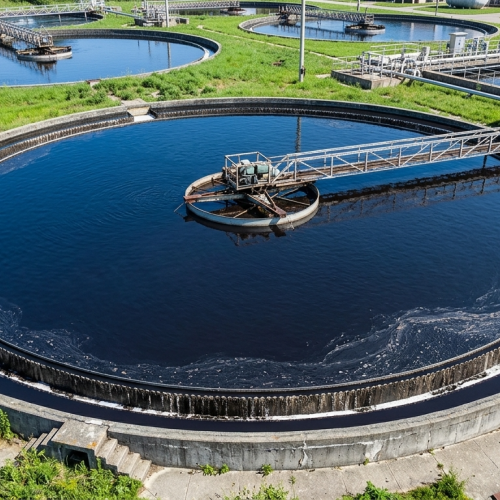
Effluent Treatment Plant
| Product Details |
|---|
An Effluent Treatment Plant (ETP) is a system designed to treat industrial wastewater (effluent) and remove pollutants such as organic matter, toxic chemicals, heavy metals, oils, and greases before the water is discharged into the environment or reused. ETPs are essential for industries to comply with environmental regulations and avoid water pollution.
|
Description
An Effluent Treatment Plant (ETP) is a facility designed to treat industrial wastewater, also known as effluent, before it is discharged into the environment or reused. Industries such as textiles, pharmaceuticals, chemicals, food processing, paper mills, and leather manufacturing generate wastewater containing harmful chemicals, oils, heavy metals, suspended solids, and organic matter. If released untreated, these pollutants can seriously damage water bodies, soil, aquatic life, and human health. Therefore, ETPs play a vital role in environmental protection and sustainable industrial development.
The main objective of an ETP is to remove contaminants from wastewater and ensure that the treated water meets environmental standards set by pollution control authorities. The treatment process generally involves physical, chemical, and biological methods carried out in different stages.
The first stage is preliminary or primary treatment, where large solids, grit, oil, and grease are removed through screening, sedimentation, and skimming processes. This stage helps protect equipment and improves the efficiency of later treatment stages. Equalization tanks are often used to maintain a uniform flow and concentration of wastewater.
The second stage is secondary or biological treatment, where microorganisms are used to break down dissolved organic matter present in the wastewater. Processes such as activated sludge, aeration, and biofiltration are commonly employed. Aeration tanks supply oxygen to bacteria, allowing them to digest harmful organic pollutants effectively. The biological treatment significantly reduces Biological Oxygen Demand (BOD) and Chemical Oxygen Demand (COD), which are key indicators of water pollution.